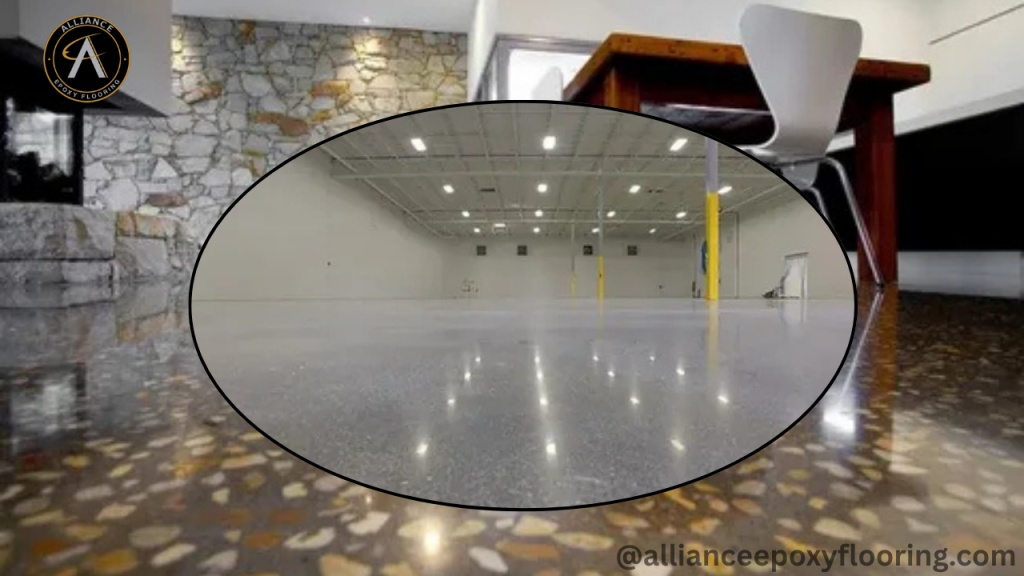
Concrete flooring has come a long way from being a dull, gray surface only suitable for industrial basements or parking garages. Today, thanks to advancements in surface treatments, polished concrete and epoxy finishes are transforming floors into high-performance, stylish surfaces for homes, commercial spaces, and even luxury showrooms.
In this comprehensive guide, we’ll explore the full scope of concrete polishing and epoxy finishing—what they are, how they work, their advantages, and why they are quickly becoming the top choice for modern flooring solutions.
Understanding Concrete Polishing
Concrete polishing is a mechanical process that transforms raw concrete into a smooth, shiny, and refined surface. The procedure involves grinding down the surface of the concrete using industrial diamond abrasives and applying chemical hardeners to strengthen the material.
The final result? A glossy, durable floor that reflects light, resists stains, and can withstand heavy traffic.
Key Features of Polished Concrete:
- Seamless surface with a glossy or matte finish
- Customizable levels of shine (from satin to mirror-like)
- Extremely low maintenance
- Long-lasting durability
Unlike other flooring options that require overlays or coverings (like vinyl, tile, or carpet), concrete polishing works directly with the existing slab—reducing material waste and installation time.
What Is Epoxy Finishing?
Epoxy finishing refers to a protective coating made by mixing resin and a hardener. When applied to a concrete surface, it cures into a tough, chemically resistant, and attractive layer.
Epoxy can be used alone or on top of polished concrete to improve resistance to chemicals, spills, and abrasions. It’s also prized for its design flexibility, with options ranging from solid colors and flakes to metallic finishes and 3D effects.
Advantages of Epoxy Flooring:
- Durable and long-lasting
- Chemical and stain resistant
- Easy to clean and sanitize
- Enhances light reflectivity
- Available in a wide range of colors and textures
The Process of Concrete Polishing
Let’s walk through what the concrete polishing process actually looks like, step by step:
1. Surface Preparation
Before any polishing begins, the concrete floor must be cleaned and evaluated. Any existing coatings, adhesives, or surface contaminants are removed. Cracks and holes are patched using repair compounds.
2. Grinding
Heavy-duty machines equipped with metal-bonded diamond abrasives grind the surface. This removes any surface irregularities and opens the pores of the concrete, preparing it for hardening and polishing. The level of aggregate exposure (salt and pepper, medium, or large aggregate) is also determined during this stage.
3. Densification
A chemical densifier is applied to harden the concrete surface. The densifier reacts with the free lime in the concrete to create a stronger crystalline structure, making the floor more resistant to dusting and wear.
4. Honing
The concrete is then refined using finer-grit diamond abrasives. This step removes scratches left from the coarser grinding and begins to create a soft, satiny sheen.
5. Polishing
Using successively finer grits (up to 1500 or 3000 grit), the floor is polished to the desired level of shine. Higher grits create a reflective, mirror-like finish.
6. Sealing (Optional)
At this point, the floor can be left as-is or enhanced with a protective coating, such as an epoxy topcoat. This adds additional performance benefits, especially in settings with chemical exposure or high foot traffic.
The Epoxy Application Process
Applying epoxy over polished concrete or directly onto prepared concrete involves several key steps:
1. Surface Preparation
If the surface hasn’t already been ground and polished, it must be properly prepared. This may involve shot-blasting, acid etching, or diamond grinding to ensure proper adhesion.
2. Primer Application
A primer coat helps bond the epoxy system to the concrete and fills micro pores for a smooth surface.
3. Epoxy Base Coat
The epoxy resin is mixed and poured onto the floor. It’s spread evenly using rollers or squeegees. Depending on the desired finish, decorative elements like colored flakes or metallic pigments may be added at this stage.
4. Topcoat
Once the base has cured, a topcoat (often polyurethane or polyaspartic) is applied for added protection. This topcoat determines the final sheen—glossy, semi-gloss, or matte.
Benefits of Combining Concrete Polishing and Epoxy Coating
When concrete polishing is followed by an epoxy finish, the two systems work synergistically to provide a flooring solution that’s as beautiful as it is functional.
Enhanced Durability
Polished concrete is already hard and long-lasting, but epoxy adds an extra layer of protection against impacts, chemicals, and abrasion.
Visual Appeal
Polishing highlights the natural beauty of the concrete. Epoxy adds vibrant colors, 3D effects, or even logos and graphics, turning the floor into a statement piece.
Hygienic and Easy to Clean
A polished, epoxy-coated floor is seamless and non-porous. This prevents the buildup of bacteria, mold, and grime—making it ideal for hospitals, restaurants, and garages.
Reflectivity
High-gloss finishes boost ambient light by reflecting it off the floor, making spaces look brighter and more open. This also helps reduce lighting costs in commercial or industrial buildings.
Environmentally Friendly
Polished concrete with epoxy uses fewer materials than other flooring systems. The process utilizes the existing concrete slab, and many modern epoxy products are low in VOCs (volatile organic compounds), making them safe for indoor use.
Where Are These Flooring Systems Used?
1. Residential
- Garages
- Kitchens
- Basements
- Living rooms
Homeowners love the modern, clean look of polished concrete with epoxy. It’s also ideal for pets, spills, and allergies.
2. Commercial
- Retail stores
- Showrooms
- Office lobbies
- Restaurants
Durability, easy maintenance, and visual appeal make it perfect for high-traffic commercial environments.
3. Industrial
- Warehouses
- Distribution centers
- Laboratories
- Manufacturing plants
In these spaces, performance is key. Epoxy-coated polished concrete withstands machinery, forklifts, chemicals, and constant use.
4. Healthcare and Institutional
- Hospitals
- Clinics
- Schools
- Government buildings
Here, cleanliness and hygiene are critical. The seamless surface ensures no bacteria can hide in cracks or seams.
Maintenance of Polished Concrete with Epoxy
One of the biggest advantages of this flooring combo is its low maintenance requirements.
Maintenance Tips:
- Daily: Dry mop or sweep to remove dust and debris.
- Weekly: Wet mop with a pH-neutral cleaner. Avoid harsh or acidic chemicals.
- Quarterly: Inspect for scratches, wear, or damage to the coating and reapply topcoat if necessary.
- Annually: Deep clean or professionally buff to maintain gloss and condition.
With these simple steps, a polished and epoxy-finished concrete floor can easily last 10 to 20 years with minimal upkeep.
Why Epoxy Is the Ideal Choice for Modern Flooring
There’s a reason epoxy has become synonymous with modern flooring. It checks all the boxes:
- Customizable – From color chips and metallic swirls to company logos.
- Resistant – Stands up to wear, spills, and heavy loads.
- Economical – Lower life-cycle costs compared to tile or wood.
- Safe – Slip-resistant options are available for added safety.
- Stylish – Achieve stunning design effects that transform any space.
When used in tandem with polished concrete, it delivers a surface that’s not only functional but also a centerpiece of the design.
Conclusion: The Smart Choice for Today’s Floors
Polished concrete and epoxy coatings offer a one-two punch for anyone looking for a flooring system that is beautiful, strong, and low maintenance. Whether in a sleek home garage, a trendy restaurant, or a demanding industrial plant, these materials adapt effortlessly to meet every challenge.
At Alliance Epoxy Flooring, we specialize in helping clients unlock the full potential of their concrete floors. Whether you’re upgrading a space or starting from scratch, our team ensures precision, durability, and an immaculate finish that lasts for years.
If you’re ready to transform your floors into something truly exceptional, concrete polishing combined with epoxy coating might be exactly what you’ve been looking for.